
📄 Resume Tips
Why 75% of Resumes Never Reach a Human — And How to Beat the ATS Filter Resume
Insights From a Recruiter Who's Reviewed 10,000+ Resumes
After reviewing thousands of resumes, recruiters consistently look for the same signals. Learn what matters most and how to make your application stand out.
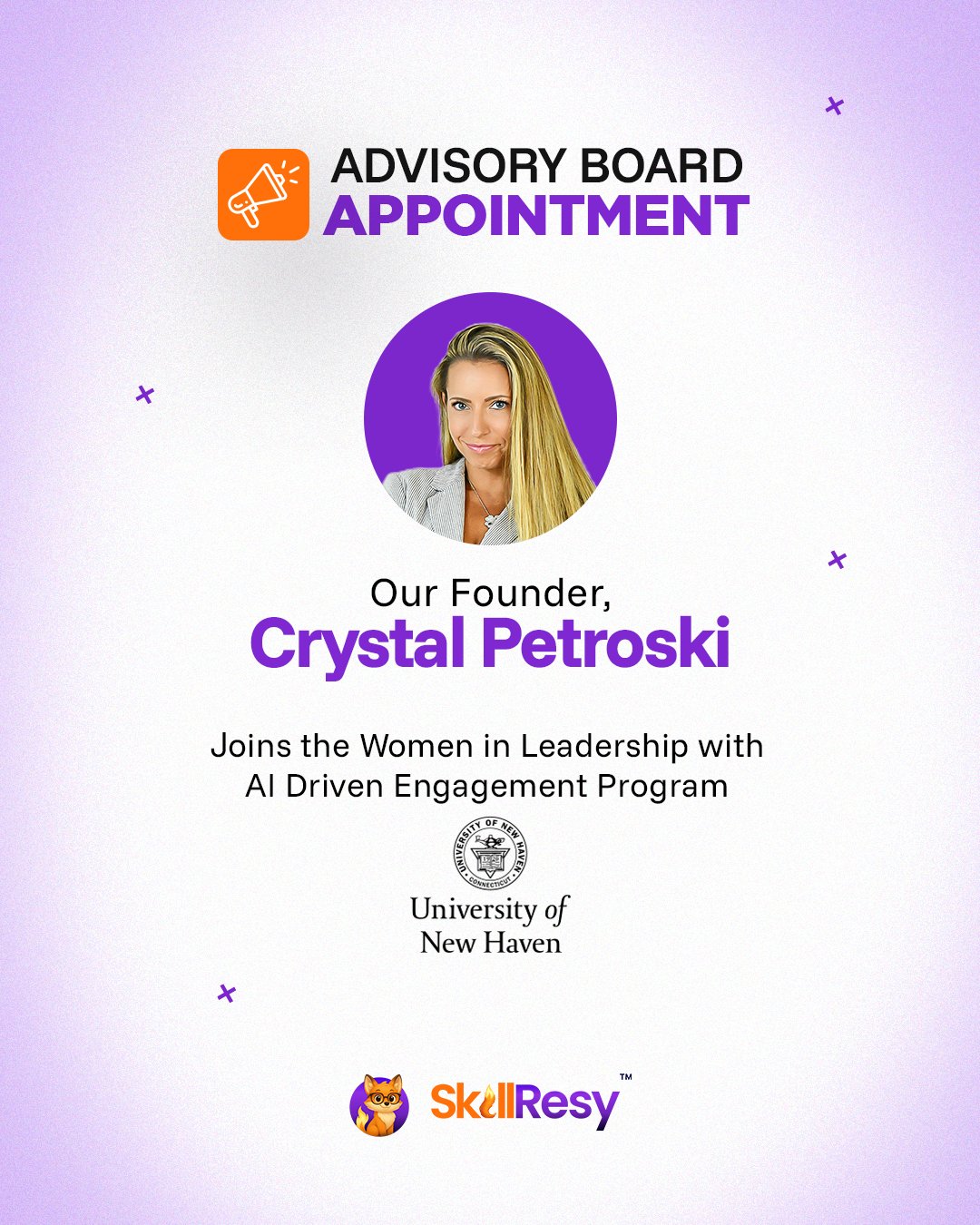
Crystal Petroski
Founder, SkillResy · Recruiter · Advisory Board Member, University of New Haven
Table of Contents
- The Invisible Gatekeeper
- What Is an ATS?
- Why Good Resumes Fail
- Before & After
- How to Beat the ATS
- The Keyword Trap
- What Scout AI Does
- The Human Layer
The Invisible Gatekeeper You've Never Met
You spent three hours on your resume. You tailored it to the job. You hit submit — and then nothing. No response. No rejection. Just silence.
Here’s what most people don’t know: your resume probably never reached a recruiter. It was filtered out by software long before a human eye landed on it. That software is called an Applicant Tracking System — ATS for short — and it’s quietly running the hiring process at the vast majority of companies.
75%
of resumes are rejected by ATS before a recruiter sees them.
At large companies, that number climbs even higher — some estimates put it at over 90% for high-volume roles. You could be the most qualified person in the applicant pool and still never get a call.
I’ve reviewed over 10,000 resumes across my career as a recruiter. I built SkillResy specifically because I watched qualified, capable people get filtered out for entirely fixable reasons. This article breaks down exactly what’s happening — and what you can do about it.
What Is an ATS — And What Does It Actually Do?
An Applicant Tracking System is software that companies use to manage the flood of applications they receive. When you apply to a job at any mid-to-large company, your resume doesn’t land in a recruiter’s inbox. It’s ingested by the ATS, parsed into structured data, and scored against the job description.
The ATS is looking for specific things:
If your resume doesn’t hit a certain score threshold, it’s automatically moved to a rejected folder. The recruiter never sees it. They’re not being lazy — there are simply too many applications for any human to review manually.
Why Good Resumes Fail the ATS Test
The frustrating truth is that a resume can be genuinely excellent — well-written, honest, impressive — and still get a 30% ATS score. Here’s why.
1. You're not using the right keywords
ATS systems are often surprisingly literal. If the job description says “project management” and your resume says “managed projects” — that might not register as a match. The phrasing matters. The exact terms matter.
Most job seekers write their resume in their own words. ATS systems scan for the employer’s words. That gap is where resumes go to die.
2. Your formatting is confusing the parser
ATS software reads text, not design. Resumes with complex layouts — two-column formats, tables, text boxes, graphics, headers and footers — often get parsed incorrectly. Your name ends up in the skills section. Your job title disappears entirely. The system scores a garbled mess instead of your actual experience.
3. You're using a generic template
A template downloaded from a design site might look beautiful on screen. But if it uses a table-based layout or graphic elements, the ATS might read it as blank. You’ve submitted a technically invisible resume.
4. You're missing required qualifications — or not stating them clearly
If a job requires “5+ years of Python experience” and your resume says “extensive programming background” — you’ve failed the filter even if you have 8 years of Python under your belt. Be explicit. Use their language.
If a job requires “5+ years of Python experience” and your resume says “extensive programming background” — you’ve failed the filter even if you have 8 years of Python under your belt. Be explicit. Use their language.
I’ve seen candidates with genuinely better experience than the person we hired get auto-rejected — purely because their resume didn’t use the right words. It’s a solvable problem, but only if you know it exists.
— Crystal Petroski, Founder of SkillResy
What the Difference Looks Like
Here’s the same work experience written two ways. One gets through ATS. One doesn’t.
Helped team with various software tasks during internship. Worked on improving the website and fixing bugs. Assisted with customer-related work and joined team meetings regularly.
Delivered 3 production-ready React components that reduced page load time by 40%, collaborating with a cross-functional team of 6 engineers in an Agile sprint environment. Resolved 14 critical bugs across 2 sprints, improving customer satisfaction scores by 22%.
Same person. Same job. Completely different result. The second version uses specific tools, quantified outcomes, and the exact language the hiring team used in their job description.
Check your own resume's ATS score — free
SkillResy’s AI scans your resume against the specific company you’re applying to and gives you a real-time ATS pass rate. The average score before: 41%. After SkillResy: 89%.
How to Beat the ATS Filter: A Practical Checklist
Here’s what actually moves the needle — based on reviewing thousands of resumes and understanding exactly what ATS systems are looking for.
🎯 The ATS-Beating Resume Checklist
- Read the job description and highlight every skill, tool, and qualification mentioned
- Use the exact phrasing from the job posting — not synonyms, not paraphrases
- Use a single-column, clean layout — no tables, graphics, or text boxes
- Use standard section headers: "Experience", "Education", "Skills" — not creative alternatives
- Include a dedicated Skills section that lists required tools and technologies explicitly
- Quantify everything — numbers, percentages, team sizes, timeframes
- Save and submit as a .docx or clean PDF — not image-based PDFs or .pages files
- Tailor each resume for each role — one generic resume won't beat multiple ATS systems
The Keyword Trap — And How Not to Fall Into It
Here’s where job seekers overcorrect: keyword stuffing. Some people, after learning about ATS, start cramming every keyword from the job description into their resume — even if they barely have experience with those things.
This creates two problems. First, some ATS systems are sophisticated enough to detect stuffing and penalise it. Second — and more importantly — if your resume does make it past the ATS, a human recruiter will read it. And a resume full of hollow keyword drops with no substance behind them is immediately obvious.
The right approach is to earn the keywords. Use the right terms to describe real experience you genuinely have. Don’t invent skills — reframe and articulate the ones you’ve actually built.
What Scout AI Does Differently
This is exactly why I built the ATS optimisation feature into SkillResy. Scout AI doesn’t just tell you your score — it shows you which keywords you’re missing, rewrites your bullet points to include them naturally, and helps you articulate your actual experience in language that ATS systems recognise.
The process takes about 3 minutes:
1 Paste the job description you’re applying for
2 Upload your current resume
3 Scout scans both and shows you your current ATS match score
4 It highlights every missing keyword and required skill
5 Use the AI rewriter to update your bullets — keeping your authentic voice
6 Download the updated resume as a clean, ATS-friendly PDF
The average SkillResy user goes from a 34% ATS score to 88%+ in a single session. That’s the difference between the silent rejection folder and a recruiter’s shortlist.
Don't Forget the Human Layer
Once you beat the ATS, a human will read your resume. That means your resume needs to work on two levels at once: optimised enough to pass the filter, but still compelling enough for a person to want to call you.
A resume that reads like a keyword list is as bad as one that never gets seen. Structure it for the machine, but write it for the human. Quantified achievements, clear progression, and a genuine sense of what you’ve built — that’s what gets you the interview.
The ATS filter isn’t going away. But once you understand how it works, it stops being a mystery and becomes a problem you can solve. Every time.
What's your resume's ATS score?
Most candidates score below 50% without knowing it. Check yours free — takes 30 seconds.
Your resume before SkillResy
41% average ATS pass rate
→ After SkillResy: 89% average